
From mobilising protests to choosing the interim prime minister -- Discord, Bitchat became virtual control rooms, even as familiar platforms like TikTok, Reddit, Instagram, etc. played their part.

'India may never fully participate in the AI hype cycle, but we can position ourselves to benefit from its inevitable disenchantment and the cycle of disillusionment,' alerts Akash Prakash.

'That is going to have an impact on literally every one, whether you buy a toothpaste, a safety pin, a car, shoes or medicines or you go to a diagnostic centre.'

Reliance Industries Ltd has consistently remained compliant with international sanctions and is expected to adhere to upcoming measures on Russian oil, analysts said, estimating that oil sourced from Russia contributes just 2.1 per cent to its consolidated EBITDA. Reliance operates the world's largest single location refining complex, with more than half of the capacity exclusively dedicated for exports.

France today increasingly resembles the Italy of the past, when governments fell with bewildering regularity, prime ministers came and went in rapid succession, and political instability became the norm rather than the exception, point out Krishnan Srinivasan and Manoj Mohanka.

In trade negotiations, as in chess, sometimes you need to accept a temporary disadvantage to secure a better long-term position, points out Sonal Varma, chief economist (India and Asia ex-Japan) at Nomura.

Russia has a "special mechanism" to confront any challenge arising out of the US slapping punitive measures against India for its procurement of Russian crude oil, Russian charge d'affaires Roman Babushkin said on Wednesday.

The crisis may not be as visible this time, but the stakes are just as high, points out Rajeswari Sengupta.

Even the Central Statistical Office has started using GDP as the main measure of economic activities since January 15 this year

The BRICS nations condemned the Pahalgam terror attack, advocated for a zero-tolerance approach to terrorism, and criticized rising tariffs during their summit in Rio de Janeiro. They also addressed global challenges and called for reforms in international institutions.

With general government debt now approaching three-quarters of GDP, and only incremental reform efforts visible, Pakistan risks prolonging its economic stagnation unless fundamental governance, regulatory, and industrial overhauls are undertaken.

The gig economy market is expected to grow at a compound annual growth rate (CAGR) of 17 per cent to reach a gross volume of $455 billion by the end of 2024, according to a white paper by The Forum for Progressive Gig Workers. Estimates suggest the gig economy has the potential to create 90 million jobs and add 1.25 per cent to India's GDP (gross domestic product) over time.

Mixed views were expressed by top economists on the Reserve Bank of India's (RBI) Monetary Policy Committee's (MPC) decision to hold the repo rate at 5.5% and maintain a neutral stance. While some say the decision was as expected and one more rate reduction is expected this fiscal, there is also a view that rate cut by MPC was warranted given the evolving global situation.

'Revision of the base year for both CPI and GDP are long overdue.' 'The basic data that went into the 2011-2012 series were mainly from surveys done in 2011 or earlier.' 'We have since seen the emergence of new sectors like platform-based work and online marketing.' 'The employment surveys and the consumption surveys need to reflect these adequately.'

The point to note for India is that we must not panic. The United States may be our largest export destination, but high tariffs will not exactly mean gloom and doom. Sure, we can throw some morsels as we continue negotiating, but we must be firm that some red lines cannot be crossed, no matter what, asserts Shreekant Sambrani.

The disbursement of the second tranche comes on a day when the International Monetary Fund is holding virtual discussions on Pakistan's upcoming budget, as the visit of its mission to Islamabad was delayed due to security concerns in the region.

Office space owners are looking at good times ahead as rentals are expected to rise due to demand for Grade A office spaces outpacing supply that has been sluggish due to construction delays, long gestation periods and developers' interests shifting to residential.

Amazon will invest more than Rs 2,000 crore (about $233 million) in India in 2025 as it strengthens its logistics and safety standards, said the ecommerce company on Thursday.

Even if no statistical jugglery is afoot, only to warn that the 'noise' in the numbers should be eliminated in order to hear the underlying music, without distortion, warns T N Ninan.

There is a need for real-time or near real-time credit reporting, instead of the current fortnightly system, to improve underwriting precision, enable timely reflection of borrower actions such as loan closures or repayments, and deliver a superior consumer experience, Deputy Governor of the Reserve Bank of India (RBI), M Rajeshwar Rao said on Wednesday.

Indian stock markets have experienced some ups and downs in the first half of 2025. However, both the Nifty 50 and Sensex saw steady gains, supported by a healthy economy and better corporate earnings. In this article, we will look at the detailed performance of these key indices and explore the sectors that drove the market rally.

Continuing on the fiscally prudent path, the Modi government in the interim Budget refrained from announcing populist measures, which will help it trim the fiscal deficit to 5.1 per cent of the GDP next fiscal and 4.5 per cent in FY26.

Questions will be raised over why those changes take place and whether non-economic factors are at play, says A K Bhattacharya.

The prospect of protracted uncertainties in the global economic landscape not only pose a risk for India's growth outlook in 2025-26, but are also likely to dent the private sector's capital raising and investment plans, the finance ministry averred on Tuesday, cautioning the country's corporates that the era of 'easy pickings' was over.
The Reserve Bank of India's (RBI) Monetary Policy Committee's (MPC) decision to cut the repo rate by 50 basis points (bps) to 5.5% was contrary to the expectations of many economists. Firstly, most of the economists expected the MPC to cut the repo rate by 25 bps citing the weakening of inflation, prospects of economic growth, geopolitical uncertainty and comfortable system liquidity.

Fitch Ratings on Thursday raised its forecast for India's economic growth to 7 per cent for the next fiscal year starting April 1 on the back of strong domestic demand and sustained level of business and consumer confidence. With a stronger-than-expected 8.4 per cent growth in gross domestic product (GDP) during the third quarter (October-December) of the current fiscal year, Fitch saw the Indian economy expanding 7.8 per cent in 2023-24 financial year (April 2023 to March 2024), marginally higher than the government's estimate of 7.6 per cent.

Deloitte India on Friday said it estimates India's GDP growth at 6.6 per cent in the current fiscal helped by consumption expenditure, exports rebound and capital flows. In its India's economic outlook report, Deloitte said the rapid growth of the middle-income class has led to rising purchasing power and even created demand for premium luxury products and services. With the expectation that the number of middle-to-high-income segments will be one in two households by 2030/31, up from one in four currently, we believe this trend will likely become further amplified, driving overall private consumer expenditure growth, it said.

While this will incur a revenue loss amounting to 0.2 per cent of GDP, it will provide a strong boost to consumer sentiment and spending, points out Rajani Sinha.

'For the first time in this country, perhaps the first time anywhere, we are going to use backwardness index.' 'It is a fundamental shift in the discourse in the country's social justice.'

"The new structure will substantially reduce taxes on the middle class and leave more money in their hands, boosting household consumption, savings and investment," Sitharaman said presenting what was dubbed as 'reformist' budget for the next fiscal in Lok Sabha.

On the back of robust tax collection, the ratio of direct taxes to gross domestic product (GDP) this financial year is likely to be the highest in this century so far. This, along with strong goods and services tax (GST) collection, may drive up receipts from central taxes as a proportion of GDP to the highest level or close to the highest since 2008-09 despite subdued excise and customs duty receipts. This will be due also to lower nominal GDP projected in the first advance estimates for 2023-24.

We have entered a new era in human history, asserts Aakar Patel.

While growth in India is largely domestic and hence the overall GDP effect may not be more than 0.15-0.2%, but overall trade will be impacted due to every country going back to the drawing board, points out Madan Sabnavis.

The Budget should undertake further reductions in import tariffs and seriously consider an announcement of India's intention to join one or both of the two Asian mega-regional free trade agreements, suggests Shankar Acharya, former chief economic adviser to the Government of India.

The RBI under new Governor Sanjay Malhotra on Friday cut interest rate for the first time in nearly five years as the central bank pivoted the policy stance to support a shuttering economy. The 25 basis points rate cut to 6.25 per cent comes after last rate reduction in May 2020. The last revision of rates happened in February 2023 when the policy rate was hiked by 25 basis points to 6.5 per cent.

The RBI on Wednesday slashed key interest rate by 25 basis points, for the second time in a row, to support a shuttering economy hit by reciprocal tariffs imposed by the US. Following the rate cut, the key policy rate eased to 6 per cent providing relief to home, auto and corporate loan borrowers.

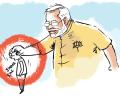
Fitch Ratings on Monday said India's steady GDP growth outlook, improved banking sector's financial health and expected interest-rate cuts in 2025 will support credit access for corporates in FY26.

'I believe that the overall demand for commercial vehicles will improve, even though there is a slowdown in the GDP.'

Generative AI (GenAI) has the potential to add a cumulative $1.2-1.5 trillion to India's GDP over the next seven years, according to a report by EY. The report titled 'AIdea of India: Generative AI's potential to accelerate India's digital transformation' says that in 2029-30 alone, GenAI can contribute an additional $359-438 billion to India's GDP. The report said that around 69 per cent of the overall impact of GenAI on India's GDP is expected to be derived from sectors such as business services (including IT, legal, consulting, rental of machinery and equipment, and others), financial services, education, retail, and healthcare.
 © 2026 Rediff.com - Advertise with us - Disclaimer - Privacy Policy - Sitemap - Feedback - About us - Terms of use - Grievances